Source Nutritional Rice Making Machine for Artificial Rice, Dairy, and Grain Processing
Compare 30 nutritional rice making machines from Jinan, China. Buyers can evaluate capacities ranging from 80 to 500 kg/h, stainless steel construction, and automatic extrusion functions for producing artificial rice and dairy products.
Key considerations
Products List




Comprehensive Sourcing Guide
Strategic Sourcing Guide for Nutritional Rice Making Machines
Understanding the Core Technology and Operational Scope
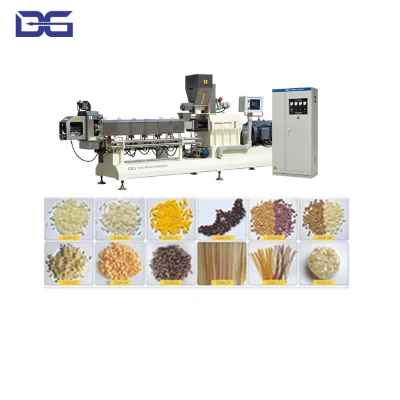
The nutritional rice making machine, often categorized under extrusion technology, represents a specialized segment of industrial food processing equipment designed to transform raw grains into artificial or fortified rice products. These machines operate on the principle of high-pressure extrusion, where raw materials such as rice flour, grain powder, and other natural ingredients are subjected to intense heat and mechanical shear. The process fundamentally alters the starch structure, creating a product that mimics the texture and appearance of natural rice while allowing for the precise integration of nutrients.
The operational scope of these units is defined by their capacity and the specific raw materials they can handle. Based on available market data, these machines typically process rice and other grains, with specific models capable of handling wheat flour and various grain powders. The output is consistently identified as artificial rice, a product often utilized in nutritional supplementation programs. The machinery is designed for automatic operation, ensuring consistent production quality with minimal manual intervention. The core function relies on a robust extrusion mechanism, where the material is forced through a die to form the final granular product.
Buyers must recognize that the "nutritional rice" designation implies a specific application: the production of fortified rice that addresses malnutrition or serves as a specialized dietary supplement. The machines are engineered to handle the unique rheological properties of these composite flours, which differ significantly from standard rice milling operations. The ability to process natural ingredients into a uniform, nutrient-dense final product is the primary value proposition of this equipment class.
Technical Specifications and Performance Metrics
When evaluating the technical specifications of a nutritional rice making machine, several critical parameters determine the suitability of the equipment for a specific production line. The voltage requirements are a primary consideration, with observed configurations supporting both 220V and 380V electrical systems. This flexibility is essential for facilities with varying power infrastructure, particularly when sourcing from international markets. The condition of the machinery is consistently listed as new, indicating that buyers should expect fully assembled, factory-fresh units rather than refurbished stock.
The power configuration is a significant driver of performance. The main drive power for these units typically ranges from 59kW to 158kW, while the installed power can extend up to 225kW depending on the specific model and capacity requirements. This variance suggests that the selection of a machine must be closely aligned with the desired production throughput. Capacity figures observed in the market include ranges of 80-120kg/H, 180-200kg/H, 300kg/H, and higher tiers reaching 150kg/H, 250kg/H, and 500kg/H. These figures represent the hourly output potential and are directly correlated with the motor power and the specific model series selected.
The physical dimensions of the machines are substantial, reflecting the industrial nature of the equipment. Standard dimensions observed include configurations such as 14000mm x 1200mm x 2200mm and larger variants reaching 30000mm x 1500mm x 2600mm. These dimensions are critical for facility planning, requiring adequate floor space and ceiling height for installation and maintenance access. The model identifiers, such as ETT65, ETT78, ETT98, SLT68, SLT70, SLT85, HM85, and DLG series, serve as specific references for these varying capacities and dimensions.
The internal construction relies heavily on high-grade materials to ensure food safety and durability. The machine body is predominantly constructed from stainless steel, specifically noted as stainless steel food-grade materials. The screw, a critical component responsible for the extrusion process, is manufactured from 38CrMoAl, a high-strength alloy known for its wear resistance and ability to withstand the high pressures and temperatures of the extrusion process. The use of stainless steel for the main machine body ensures compliance with hygiene standards required for food processing.
Component Quality and Electrical Systems
The reliability of a nutritional rice making machine is heavily dependent on the quality of its electrical and mechanical components. The main motor is a pivotal element, with observed specifications indicating the use of reputable brands such as Siemens, ABB, or a combination of both. These brands are recognized for their efficiency, durability, and consistent performance in industrial settings. The selection of the motor brand often correlates with the overall price point and the expected lifespan of the equipment.
Complementing the main motor is the inverter system, which controls the speed and torque of the extrusion process. The inverter specifications frequently list Delta or ABB as the preferred suppliers. These inverters allow for precise control over the extrusion parameters, which is essential for maintaining the quality of the artificial rice product. The electrical control system also includes circuit breakers and other electric parts sourced from established manufacturers like LG, FUJI, and Omron. This standardization of components suggests a supply chain that prioritizes reliability and ease of maintenance.
Bearings are another critical component, with SKF cited as a common brand in the specifications. High-quality bearings are essential for supporting the high-speed rotation of the screw and other moving parts, reducing friction and preventing premature failure. The use of SKF bearings indicates a focus on long-term operational stability and reduced downtime. The automatic grade of the machine ensures that these components work in concert to minimize human error and maximize production efficiency.
Compliance, Certification, and Safety Standards
Navigating the compliance landscape is a vital step in the procurement of industrial food machinery. The primary certification observed in the market data is CE, which indicates conformity with health, safety, and environmental protection standards for products sold within the European Economic Area. Some listings also reference ISOCE, suggesting adherence to specific international organizational standards, though buyers should verify the exact scope of such certifications. The CE mark is a fundamental requirement for many international markets and serves as a baseline indicator of the machine's safety design.
The material standards are equally important for food safety. The use of stainless steel food-grade materials for the machine body and the specific alloy 38CrMoAl for the screw are critical for preventing contamination and ensuring the purity of the final nutritional rice product. The processing of natural ingredients requires equipment that can be thoroughly cleaned and sanitized, and the stainless steel construction facilitates this requirement.
Buyers must also consider the packing standards, which are listed as plywood cases or wooden packages. These packaging methods are designed to protect the machinery during long-distance shipping, which is common when sourcing from manufacturing hubs like Jinan, China. The packing standard ensures that the machine arrives in the condition specified, minimizing the risk of transit damage. The origin of the machines is consistently identified as China, specifically from the Jinan region, which is a known hub for food processing machinery manufacturing.
Cost Drivers and Economic Considerations
The pricing of nutritional rice making machines is influenced by a complex interplay of factors, including capacity, component quality, and customization options. The observed price range in the market spans from 5,500 USD to 85,000 USD. This wide range reflects the diversity of models available, from smaller units with lower capacity to large-scale industrial systems with high throughput and advanced automation. The price is not solely a function of size but also of the specific components selected, such as the brand of the motor and inverter.
Customization is a significant cost driver, with the market data confirming that customization is available. Buyers seeking specific capacities, voltage configurations, or material specifications may incur additional costs. The ability to customize the machine to fit specific production needs or facility constraints adds value but also increases the complexity of the procurement process. The minimum order quantity (MOQ) is observed to be 1, indicating that buyers can purchase individual units without needing to commit to large bulk orders.
The capacity of the machine is a primary determinant of the price. Higher capacity models, such as those capable of 500kg/H, will naturally command a higher price than units with 80kg/H capacity. The installed power and main drive power also correlate with the price, as higher power requirements necessitate more robust electrical components and a larger frame. Buyers should carefully evaluate their production requirements against the price to ensure they are not over-investing in capacity they do not need or under-investing in a machine that cannot meet their output goals.
Supplier Evaluation and Quality Assurance
Evaluating suppliers for nutritional rice making machines requires a rigorous approach to ensure the delivery of high-quality equipment. The availability of after-sales service is a critical factor, with one year of free service being a common offering. This service period is essential for troubleshooting initial installation issues and ensuring the machine operates correctly during the critical ramp-up phase. Buyers should verify the scope of this service, including whether it covers parts, labor, and on-site support.
The origin of the machine, specifically Jinan, China, provides a geographical context for supplier evaluation. Buyers should investigate the specific manufacturing facilities in this region to assess their production capabilities and quality control processes. The use of standardized components from brands like Siemens, SKF, and Delta suggests that reputable suppliers adhere to established supply chains. However, buyers must verify that these components are genuine and not counterfeit, as this can significantly impact the machine's performance and longevity.
Quality control should be a central part of the supplier evaluation process. Buyers should request detailed documentation regarding the manufacturing process, including material certifications for the stainless steel and screw alloy. The inspection of the final product, the artificial rice, should also be considered, as the machine's ability to produce consistent, high-quality output is the ultimate measure of its performance. The automatic grade of the machine implies a level of sophistication in the control systems, which should be tested during the factory acceptance phase.
Long-Term Procurement and Operational Strategy
Sourcing a nutritional rice making machine is a long-term investment that requires careful planning for future operations. The customization options available allow buyers to adapt the machine to changing production needs, such as scaling up capacity or modifying the product formulation. The availability of spare parts, particularly for critical components like the screw and bearings, is essential for maintaining continuous operation. The use of standard brands for motors and inverters facilitates the sourcing of replacement parts, reducing the risk of extended downtime.
The operational strategy should include a comprehensive maintenance plan. The automatic nature of the machine reduces the need for constant manual oversight, but regular maintenance is still required to ensure the longevity of the equipment. The one-year free service period provides a foundation for this maintenance, but buyers should plan for ongoing costs beyond this period. The stainless steel construction and high-quality materials suggest that the machine is designed for durability, but the harsh conditions of the extrusion process will eventually lead to wear.
Buyers should also consider the energy efficiency of the machine. The main drive power and installed power figures indicate significant energy consumption, and optimizing the operation of the inverter and motor can lead to substantial cost savings over the life of the machine. The capacity of the machine should be matched to the production demand to avoid running the machine at inefficient loads. The final product, artificial rice, has a specific market application, and the machine's ability to produce this product consistently is key to the success of the procurement.
Comparative Analysis of Machine Models
To assist in the selection process, the following table compares key specifications observed across different model series. This comparison highlights the variations in capacity, power, and dimensions that buyers must consider.
| Model Series | Typical Capacity (kg/H) | Main Drive Power (kW) | Installed Power (kW) | Standard Dimensions (mm) |
|---|---|---|---|---|
| ETT / SLT Series | 80-120, 180-200, 300 | 59, 84, 158 | 84, 120, 225 | 14000 x 1200 x 2200 |
| HM Series | 150, 250, 500 | Variable | Variable | 17000 x 1300 x 2200 |
| DLG Series | Variable | Variable | Variable | 30000 x 1500 x 2600 |
Note: The table reflects observed ranges and specific models mentioned in the product data. Actual specifications may vary based on customization.
This comparative view underscores the importance of matching the machine's technical capabilities to the buyer's specific production requirements. The ETT and SLT series offer a range of capacities suitable for smaller to medium-scale operations, while the HM and DLG series appear to target larger industrial applications with higher throughput. The significant variation in dimensions also highlights the need for careful facility planning.
Final Procurement Considerations
In conclusion, sourcing a nutritional rice making machine involves a detailed evaluation of technical specifications, component quality, and supplier reliability. The market offers a wide range of options, from basic models to highly customized industrial systems. Buyers must prioritize the verification of certifications, the quality of electrical components, and the availability of after-sales support. The price range of 5,500 to 85,000 USD reflects the diversity of the market, and careful analysis of capacity and power requirements is essential to make an informed decision. By focusing on these key areas, buyers can secure a machine that meets their production needs and ensures the consistent quality of their nutritional rice products.
FAQs
What is the production capacity of these machines?
The production capacity ranges from 80 to 500 kilograms per hour depending on the specific model selected. Units are available with outputs of 80-120kg/H, 180-200kg/H, 300kg/H, 150kg/H, 250kg/H, and 500kg/H to match different production needs.
Which voltage options are available for operation?
These machines support both 220V and 380V electrical systems to accommodate varying facility power infrastructures. The specific voltage configuration can be selected to ensure compatibility with the buyer's local power supply standards.
Can the machine be customized for specific needs?
Yes, customization is available to tailor the equipment to specific production requirements or facility constraints. Buyers can request adjustments to capacity, voltage, or material specifications to ensure the machine fits their unique operational goals.
What materials are used for the machine construction?
The machine body is constructed from stainless steel food-grade materials to ensure hygiene and durability. The critical extrusion screw is manufactured from 38CrMoAl alloy, which provides high strength and wear resistance during the processing of natural ingredients.
Which brands are used for the main motor and components?
The main motor typically utilizes reputable brands such as Siemens, ABB, or a combination of both for reliable performance. Electrical components like inverters, circuit breakers, and bearings are sourced from established manufacturers including Delta, LG, FUJI, Omron, and SKF.
What certification does the equipment hold?
The equipment holds CE certification, indicating conformity with health, safety, and environmental protection standards for the European market. Some listings also reference ISOCE standards, ensuring adherence to specific international organizational requirements for food processing machinery.